Writing a Logline and Synopsis for Your Short Drama
How to sum up a vertical short drama in one sentence and one page: logline formulas, a synopsis structure and examples you can adapt for your own series.

Before you write episodes, it helps to know exactly what your series is about. A logline sums it up in one sentence. A synopsis tells the whole story in a page. Both are useful for planning, for pitching to collaborators and for writing the short description viewers see in an app. This guide shows how to write each one.
What a logline must contain
A logline answers three questions: who is the main character, what do they want or need, and what stands in the way. For short dramas, it should also hint at the hook that makes the premise special.
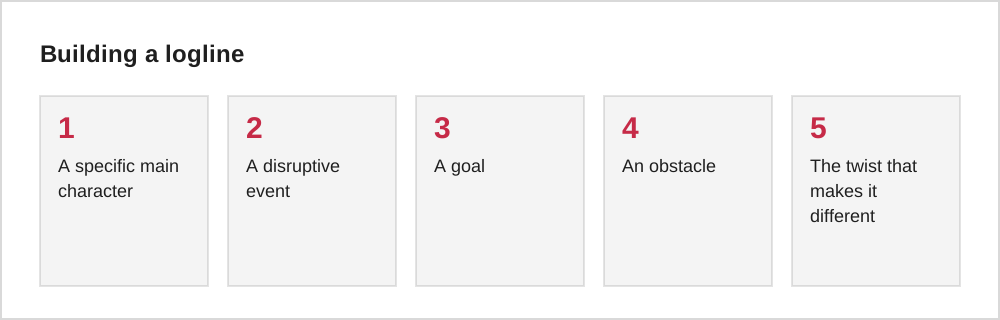
A simple formula is: When [event] happens to [character], they must [goal], but [obstacle]. For example: *When a junior designer is dumped at her engagement party, she marries a stranger on the spot, only to discover he owns the company that just fired her.*
Strong and weak loglines
| Weak | Stronger |
|---|---|
| A woman seeks revenge on her family. | Thrown out by her stepmother on her wedding day, a disinherited daughter returns five years later as the investor who can save, or ruin, the family firm. |
| Two people fall in love after a fake marriage. | A broke nurse agrees to a one-year marriage with a cold CEO to pay her mother's hospital bills, but his first wife is still living in the house. |
| A girl gets a second chance at life. | Betrayed and killed by her husband, a woman wakes up on the morning of their first date with ten years of memories and one week to stop the wedding. |
The stronger versions name a specific situation, give the character a concrete goal and include a detail that raises a question.
Writing the synopsis
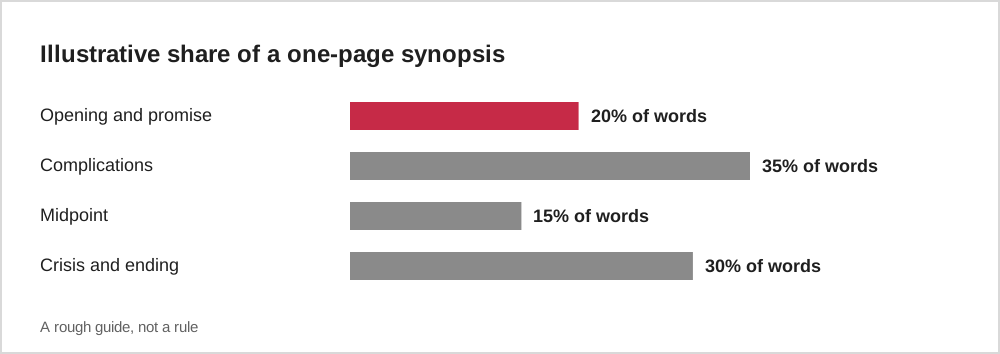
A synopsis tells the full story, including the ending, in about a page. It is a planning tool rather than a marketing text, so do not hide twists. Write it in the present tense and in plain language.
- Opening situation. Who the main character is and what injustice begins the story.
- The promise. The central arrangement or goal, such as the contract, the revenge plan or the hidden identity.
- Rising complications. Three or four major obstacles, each bigger than the last.
- Midpoint turn. A revelation that changes what the character wants or understands.
- Crisis. The moment when everything seems lost.
- Climax and ending. How the main conflict is resolved and where each key character ends up.
From synopsis to episode list
Once the synopsis is done, split it into episodes. A 60-episode series might give 5 episodes to the opening, 25 to the complications, 5 to the midpoint, 15 to the escalation and crisis, and 10 to the climax and ending. Write one line per episode describing its main event and its final hook.
If a section of the synopsis cannot fill its episodes, add a complication there. If a section is overcrowded, move events or cut a subplot. Our guide to how short dramas are written explains this planning stage in more detail.
Writing the app description
The description viewers see is a third, shorter text. It should be two or three sentences, keep the main twist hidden and promise a specific kind of pleasure: romance, revenge, mystery. Avoid listing every character. Focus on the main relationship and the situation that sets the story in motion.

Common mistakes
New writers often make the logline too general, mention too many characters or describe the theme instead of the story. "A story about love and betrayal" is a theme. "A bride discovers her groom is marrying her for her inheritance" is a story.
Another common mistake is leaving the ending out of the synopsis. Without a planned ending, series tend to drift or rely on a sudden, unearned twist. Knowing the destination makes every episode easier to write.
Common questions
How long should a logline be?
One sentence, ideally under 40 words. If you need two sentences, the premise may not be clear yet.
Should the synopsis include every subplot?
Only those that affect the main story. A synopsis is for seeing the shape of the series, so leave out small scenes and minor characters.
The short version
A logline captures your series in one sentence: character, event, goal, obstacle and twist. A synopsis tells the whole story in a page, including the ending. Write both before the episodes, and the rest of the planning becomes much easier.