Healthy Binge Habits for Short Drama Fans
Short dramas are designed for one more episode. Practical habits for enjoying binges without losing sleep, time or money.

Binge-watching a short drama can be a genuinely fun evening. The format is also designed to make stopping difficult, with a cliffhanger every minute and the next episode a swipe away. A few habits help you enjoy the binge without paying for it with sleep, time or money.
Plan the session
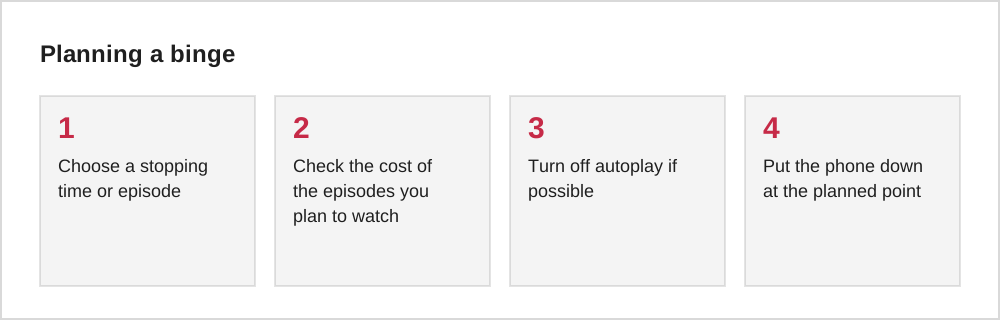
Decide in advance how long you will watch or how many episodes you will see. A plan made before you start is much easier to keep than one made at a cliffhanger.
Protect your sleep
Late-night viewing is where many binges get out of hand. Bright screens and emotional cliffhangers make it harder to fall asleep. Using your phone's downtime or bedtime features, and charging your phone outside the bedroom, are simple ways to protect sleep.
If you want to keep watching at bedtime, stop on the opening of an episode rather than its cliffhanger. It is much easier to put down.
Watch your time and money
Both iPhone and Android include screen time reports that show how long you spend in each app. Checking them weekly gives an honest picture. For spending, see our guide to setting a viewing budget.
Turn down the nudges
Notifications about new episodes and daily rewards are designed to bring you back. Turning most of them off lets you choose when to watch. You can usually keep important account alerts while disabling promotional ones.
Signs to take a break
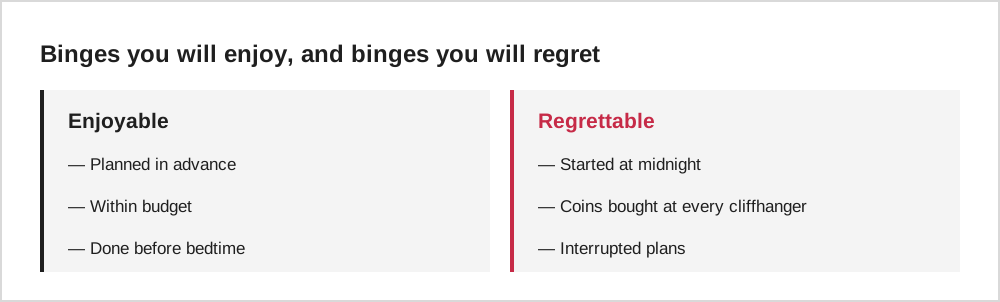
If short dramas regularly replace sleep, crowd out time with people, or lead to spending you regret, it is worth taking a break for a few days. Many viewers find they enjoy the format more when they return with clearer limits.
Making stopping easier
Stopping is easier when the decision is made before emotions run high. Some viewers set a timer for their planned session and stop when it rings, regardless of the cliffhanger. Others watch only a set number of episodes per day, similar to reading a chapter of a book.
Changing the environment helps too. Watching on the sofa rather than in bed, keeping the phone out of reach afterwards, and having something else planned for after the session all reduce the pull of the next episode.
Using phone tools to help
Both major phone platforms include tools that support healthier viewing. On iPhone, Screen Time can set daily limits for individual apps and schedule downtime. On Android, Digital Wellbeing offers app timers and a bedtime mode that turns the screen grey. These limits are easy to override, but the reminder alone often prompts a better decision.
Turning off notifications from drama apps is another simple step. Notifications about new episodes are designed to bring you back at moments you did not choose. Without them, you open the app when you decide to, which tends to make sessions shorter and more enjoyable.
Choosing series that end well
Some series feel endless because they keep adding new twists without resolving earlier ones. Before starting, check the total episode count and skim recent reviews for comments about the ending. A complete story with a satisfying conclusion is easier to stop watching than one that leaves you hanging.
Shorter series, around 50 to 70 episodes, are also easier to fit into a week without long sessions. Saving longer series for holidays or weekends, when late nights matter less, is a simple way to enjoy them without affecting work or sleep.
Common questions
Is it better to watch a series in one go or spread it out?
Either can be fine. Spreading a series over several days usually makes it easier to control time and spending, and cliffhangers lose some of their pull overnight.
Do short dramas affect attention span?
Researchers continue to study how short-form video affects attention. Mixing short dramas with longer activities, such as reading or films, is a sensible balance.
The short version
Plan binges before you start, protect your sleep, check screen time and spending weekly, and turn off promotional notifications. Short dramas are most enjoyable when you choose when to stop.