Setting a Short Drama Budget You Will Actually Keep
A practical method for deciding how much to spend on short dramas, tracking it without effort, and using phone settings to make overspending harder.
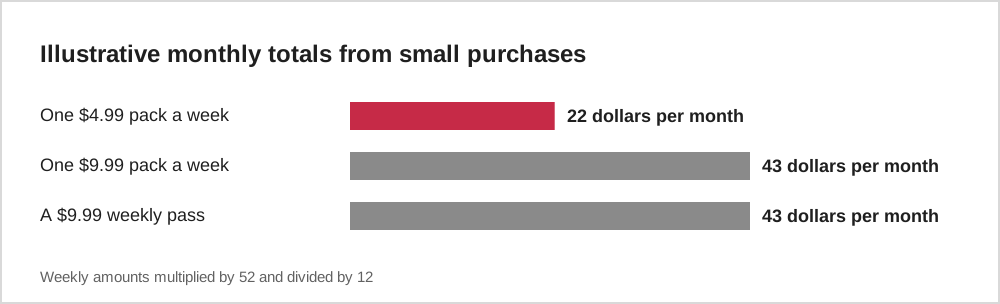
Short drama spending is easy to underestimate because it arrives in small pieces: a coin pack here, a weekly pass there. None of them feels large on its own. A simple budget, set when you are not in the middle of a cliffhanger, keeps the hobby enjoyable.
Decide before you watch
The most effective rule is to set your budget outside the app. Inside the app, every offer is timed for maximum curiosity. Outside it, you can compare short dramas with other things you enjoy, such as a cinema ticket, a book or a streaming subscription.
Make spending visible
Both app stores keep a purchase history. Checking it once a month shows the real total, including small coin packs you have forgotten.
Tools that help
- Require authentication for every purchase in your phone's settings, so nothing is bought with a single tap.
- Use gift cards or prepaid balances loaded once a month, which creates a natural limit.
- Remove saved payment cards from shared devices.
- Track subscriptions in your store's subscription list.
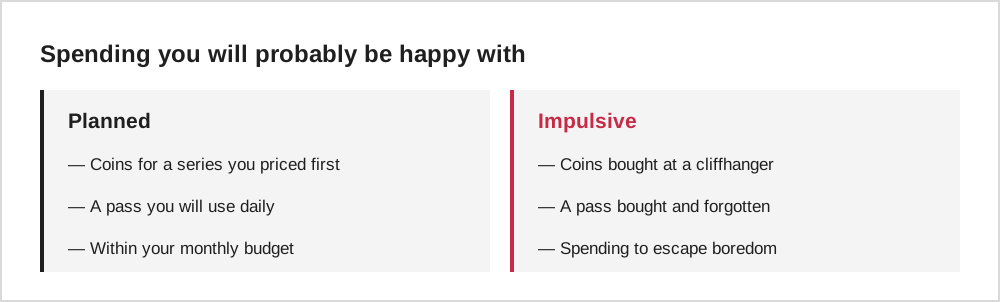
A useful personal rule: never buy coins during the first minute after a cliffhanger. Wait until the next day; if you still want to continue, buy then.
Rules for the moment
When spending stops feeling good
If you notice that you are spending more than you planned again and again, hiding purchases, or feeling stressed about it, that is a signal to take a break. Talking to someone you trust helps, and many countries have support services for problematic spending.
A simple monthly routine
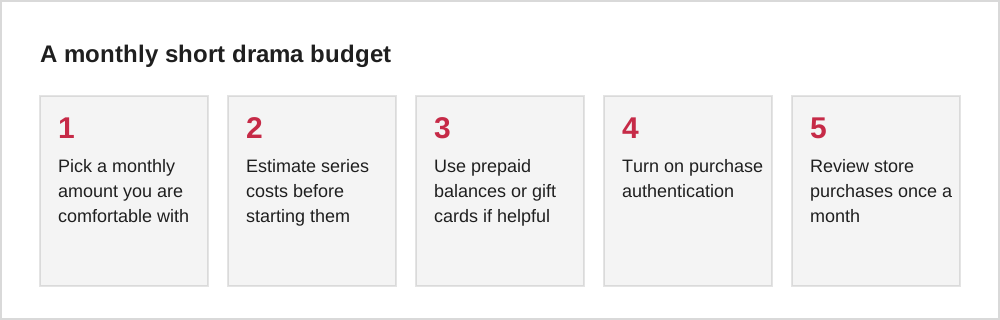
A budget is easiest to keep with a short monthly routine. On the first day of the month, decide the amount and load it as a prepaid balance or note it somewhere visible. Before starting any new series, estimate the cost of the paid episodes. At the end of the month, open your store's purchase history and add up what you actually spent, including passes.
The aim is not perfect accuracy but awareness. Many viewers find that the act of estimating a series cost before starting changes their choices: they pick shorter series, wait for promotions or decide that some stories are not worth finishing. Those small decisions add up to a budget that holds without much willpower.
Choosing a number that fits
There is no right amount to spend on short dramas. A useful starting point is to compare them with other entertainment you pay for. If a streaming subscription costs a certain amount per month, setting a short drama budget around that level keeps it in proportion. Others prefer a fixed amount per series, such as the price of a cinema ticket.
Whichever method you choose, make it specific and write it down. A vague plan to spend less rarely survives the moment when a cliffhanger lands just before a paywall. A concrete number, checked against your store purchase history, gives you something firm to rely on.
Budgeting together
If a household shares a payment account, agree on a combined budget and on who can make purchases. Both major app stores offer family features that can require approval before a purchase, which helps avoid surprises, especially where children use the same devices.
Talking about spending openly also removes some of the embarrassment people feel about small in-app purchases. Short dramas are a normal entertainment expense. Treating them that way, with an agreed amount like any other subscription, makes it easier to enjoy them without guilt.
Common questions
Should passes count in my budget?
Yes. Include weekly and monthly passes alongside coin packs, so the monthly total is complete.
What is a sensible amount to spend?
There is no single right number. A good test is whether you would happily spend the same amount on another form of entertainment.
The short version
Set your budget outside the app, estimate series costs before starting, use purchase authentication and prepaid balances, and review your purchases monthly. Short dramas are more fun when the spending was your decision.