Inheritance Wars and Family Feuds in Short Dramas
Wills, boardroom votes, scheming relatives and switched heirs: how family conflict drives short drama plots and what makes a family villain believable.
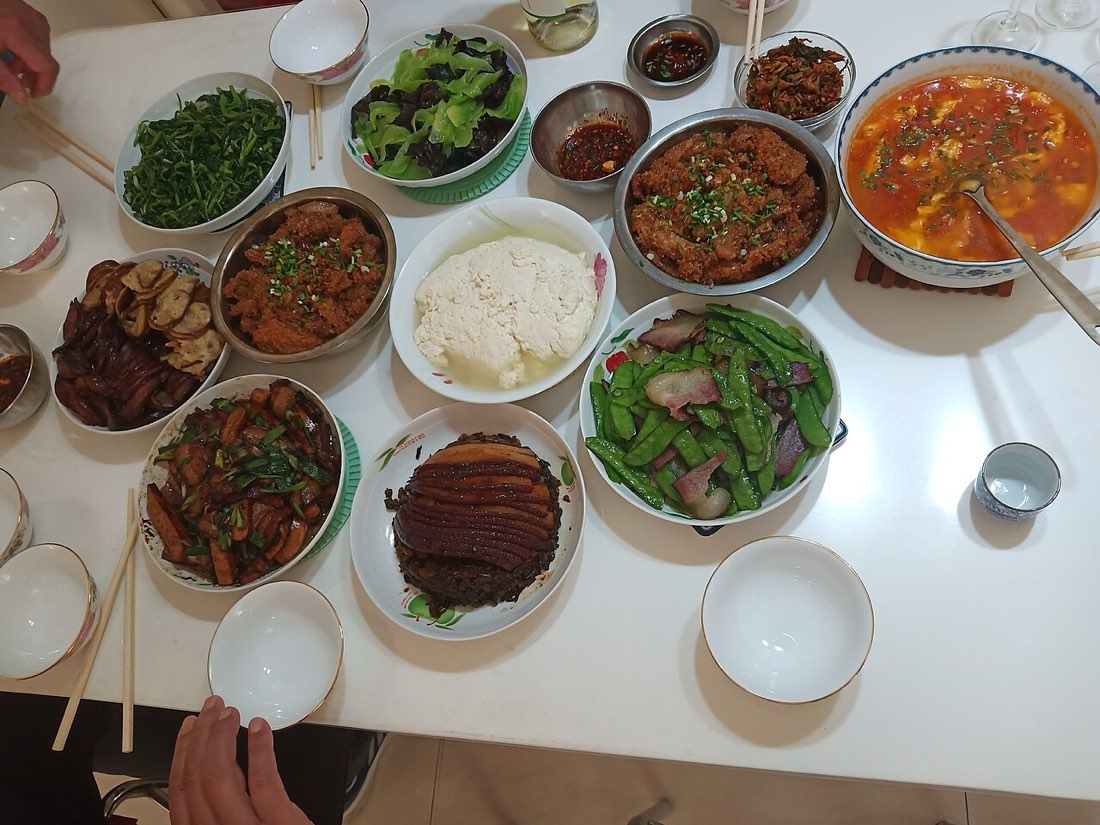
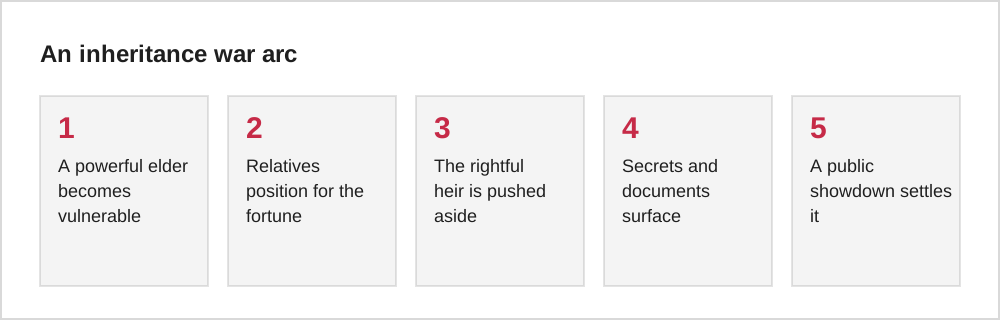
Family conflict is one of the oldest engines of drama, and short dramas use it constantly. A patriarch falls ill, a will is read, a company changes hands, and suddenly relatives who smiled at dinner are plotting against each other. Everyone understands family loyalty and betrayal, which makes the stakes clear from the first minute.
Typical ingredients
| Ingredient | What it adds |
|---|---|
| The will | A clear prize and a deadline |
| The scheming relative | A villain close to home |
| The overlooked child | An underdog with a claim |
| The boardroom vote | A public moment for reversals |
| The family secret | A reveal that changes who deserves what |
Why family feuds suit short episodes
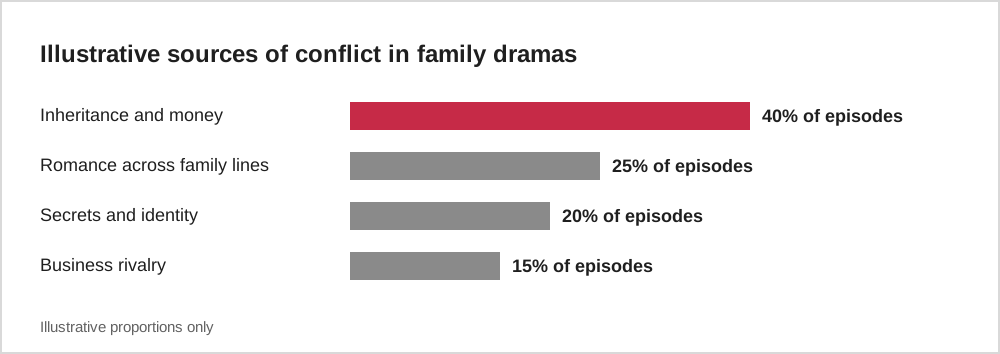
Family stories generate conflict without needing outside threats. Every dinner, birthday or hospital visit can become a confrontation. Shared history also means a single line of dialogue can carry years of resentment, which is efficient storytelling for a one-minute episode.
Watch the elder who seems to be dying. In many family dramas, they are more aware of the schemes than anyone realises.
What makes a good family villain
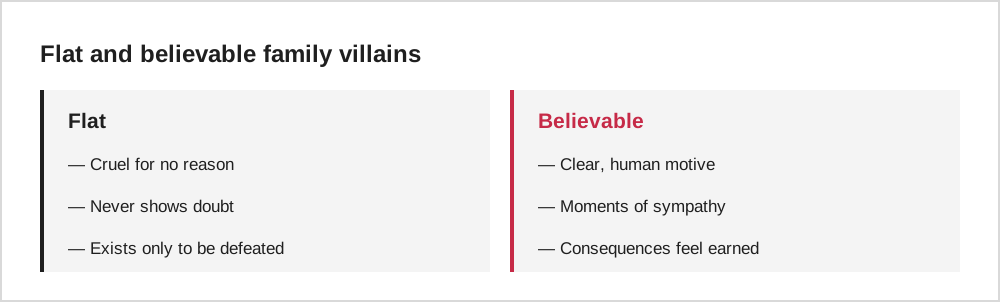
The weakest family dramas feature villains who are cruel for no reason. Stronger ones give them understandable motives: a lifetime of being overlooked, fear of losing status, or a genuine belief that they are protecting the family.
Overlaps with other tropes
Family feuds often contain hidden heirs, revenge and contract marriages, arranged to secure a family's position. Recognising which tropes are combined helps you predict the story's turns.
The set pieces to expect
Family dramas rely on a handful of set-piece scenes. The family dinner is the classic arena: everyone is present, tensions are on display and a single remark can spark open conflict. The hospital bedside is another, often where a secret is whispered or a will is mentioned. Finally, the boardroom or shareholders' meeting provides a public stage for the decisive reversal.
These settings are efficient for production too, because each can host many scenes. If you notice that a series keeps returning to the same dining room, it is not a lack of imagination so much as a sensible use of a fast production schedule. The interesting part is how each return to the same room raises the stakes compared with last time.
Common character roles
Family feud series reuse a recognisable cast. There is often an ailing patriarch or matriarch whose will or company is at stake, a favoured child who is less capable than they seem, a scheming step-parent or in-law, and an underestimated heir who has been pushed aside. Loyal staff, such as a housekeeper or a family lawyer, frequently hold key information.
Recognising these roles helps you predict where a story will go, and it also highlights when a series does something fresh. A sympathetic step-mother or a capable favourite child can surprise viewers who expect the usual pattern. Those surprises are often what makes a family drama memorable.
Inheritance plots and real life
Short dramas simplify inheritance a great deal. A single changed will, a hidden recording or a surprise DNA test can overturn everything in one episode. Real inheritance disputes are usually slower, involve lawyers and courts, and depend heavily on local law.
That gap is part of the fantasy and is not a problem in itself. It is worth keeping in mind, though, if a series makes you think about your own family's arrangements. Fiction is a fine way to explore feelings about fairness and favouritism, but real decisions about wills or property deserve proper legal advice rather than lessons from a drama.
Common questions
Why do so many short dramas involve wealthy families?
Wealth raises the stakes of family conflict and allows dramatic reversals, such as sudden disinheritance or a surprise heir. It also offers the visual appeal of luxury settings.
Do family dramas always end in reconciliation?
Many end with the deserving heir restored and the schemers punished, sometimes with partial reconciliation. Complete forgiveness is less common in the format.
The short version
Inheritance wars use wills, secrets and scheming relatives to create stakes everyone understands. The best family dramas give their villains believable motives and let reveals genuinely change who wins.