Second-Chance Romances: Old Flames in Fast Forward
Former partners meet again after years apart, often with a secret between them. Why second-chance romances suit short dramas and how they handle the past.

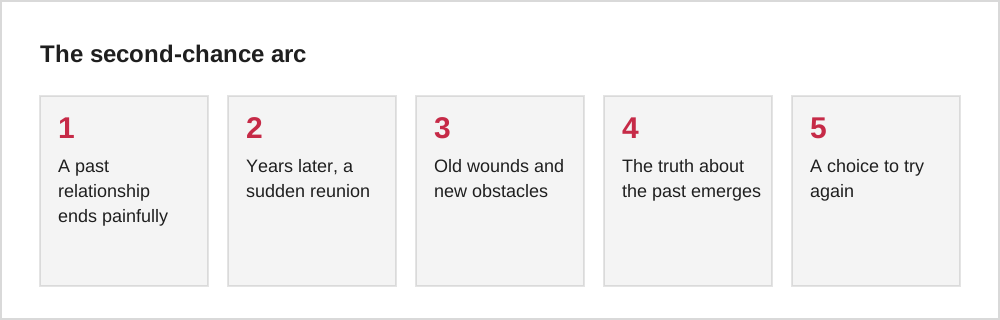
A second-chance romance reunites two people who were once together. Years later, they meet again, at a wedding, a job interview or a hospital, and the feelings they buried come back. Often there is a secret: a misunderstanding that drove them apart, a child one of them never knew about, or a betrayal that was not what it seemed.
The usual shape
Why it works in short dramas
- Instant history. The audience understands the emotional stakes immediately, without slow courtship scenes.
- A mystery built in. Why did they break up? The answer can be revealed piece by piece.
- Strong reunion moments. A shocked recognition across a room is perfect for a cliffhanger.
| Common secret | Typical reveal |
|---|---|
| A misunderstanding | A letter, message or witness clears it up |
| A hidden child | A child who looks strikingly familiar |
| A forced separation | A family member's scheme is exposed |
| A sacrifice | One partner left to protect the other |
Flashbacks are often used sparingly and at key moments. When a series suddenly shows a flashback, a major revelation about the past is usually close.
Handling the past responsibly
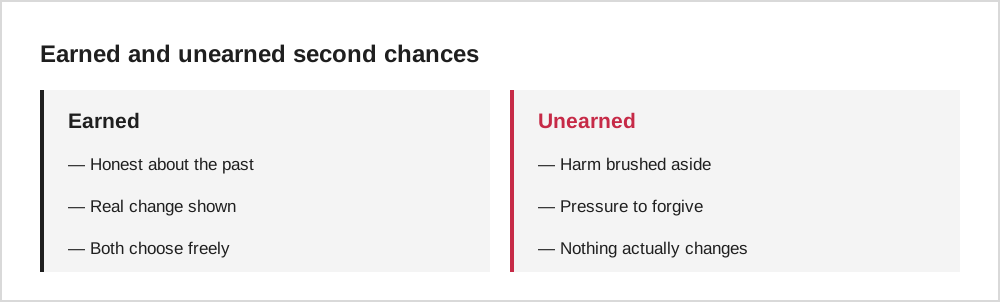
Second-chance stories are strongest when the past is taken seriously. If one partner caused real harm, a satisfying story shows genuine accountability rather than a quick apology and a kiss. Stories that wave away serious harm can leave viewers uneasy.
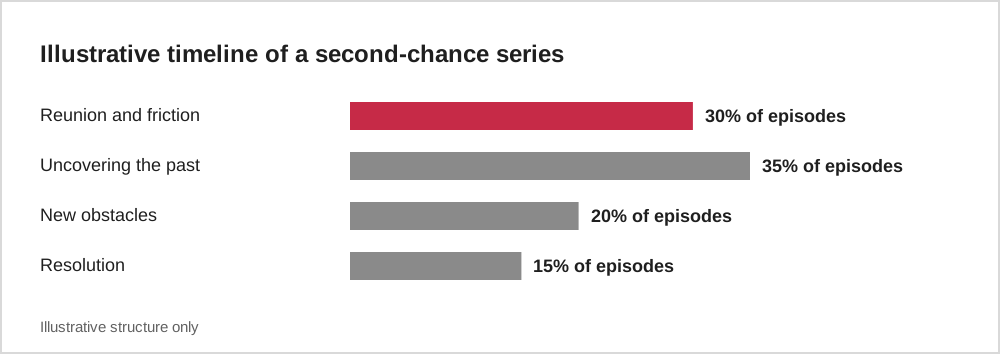
Pairings
Second chances often combine with secret billionaire stories, where a former partner returns wealthy, and with revenge, where a wronged partner returns stronger.
How flashbacks are used
Second-chance romances often use flashbacks sparingly, because every second of a short episode counts. A flashback is usually reserved for a turning point: the original breakup, the misunderstanding, or the moment one partner chose to leave. Showing it at the right time can transform how the audience sees a character in a single scene.
Some series reveal the past in pieces, with each flashback adding a small detail that changes the meaning of the last. This technique keeps viewers guessing about who was really at fault. When the full picture finally emerges, it often reframes earlier episodes, which rewards viewers who paid attention.
The reunion scene
The moment the two former partners meet again is the heart of the trope, and series spend care on it. Common settings include a job interview where one is now the other's boss, a wedding where one is a guest, or a hospital where one is the doctor. The setting usually puts one character in a position of power, which adds tension to the reunion.
The scene often holds on faces rather than words. A dropped glass, a long look or a sudden silence tells the audience everything. In vertical framing, a close-up of each face in turn is especially effective, because there is little else in the frame to distract from the reaction.
Letting time show
Good second-chance stories show that the years apart have changed both people. One partner may have built a career, raised a child alone or carried guilt about the breakup. The other may have become harder, wealthier or more cautious. The romance works when they have to get to know these new versions of each other.
Weaker versions skip this and treat the reunion as if no time had passed. Viewers tend to find that less convincing. If you are writing in this trope, give each character one concrete change from their years apart and let it cause at least one conflict before they can reconcile.
Common questions
Why is the hidden child such a common twist?
It instantly raises the stakes of a reunion and creates a visual clue that can be revealed gradually. It is a very efficient twist for a short format.
Are second-chance romances more realistic than other tropes?
They often feel more grounded, because most people understand the pull of an old relationship, even if the specific twists are dramatic.
The short version
Second-chance romances get emotional weight for free from shared history, and use secrets about the past to keep viewers watching. The best ones treat past harm honestly before offering a happy ending.